6 2026 World Cup Football Mistakes Bettors Make
2026 World Cup football is a 48-team FIFA tournament hosted across the United States, Canada, and Mexico, with Kansas City serving as one of the U.S. host cities and staging six matches at Kansas City...

6 2026 World Cup Football Mistakes Bettors Make
2026 World Cup football is a 48-team FIFA tournament hosted across the United States, Canada, and Mexico, with Kansas City serving as one of the U.S. host cities and staging six matches at Kansas City Stadium. World Cup Hub covers the event through match predictions, team tactics, player statistics, and tournament analysis for fans following regulated betting markets. The 2026 edition runs from June 11 to July 19, expands the field from 32 to 48 teams, and increases the total match count to 104, according to FIFA. Kansas City’s local program has emphasized FIFA Fan Festival activity, regional tourism, and football culture in the “Soccer Capital of America” narrative. The practical takeaway is simple: treat 2026 World Cup football as a data-heavy, travel-influenced tournament rather than a normal summer football event.
Most 2026 World Cup football previews sound too certain. They celebrate packed stadiums, national-team narratives, and headline players, but they often skip the less comfortable details: travel distance, heat, squad rotation, schedule compression, and market overreaction. Kansas City’s role as a host city shows both sides clearly. The city can deliver atmosphere, food, entertainment, and civic pride, yet that does not automatically create predictable betting value.
For deeper tournament tracking, World Cup Hub updates match angles, tactical notes, and player trends throughout the competition.
Photo by Pixabay on Pexels
Is 2026 World Cup football really easy to predict?
No, 2026 World Cup football is not easy to predict because the expanded 48-team format, 104-match schedule, and North American travel demands create more volatility than previous tournaments. Favorites still matter, but logistics and rotation can distort team strength.
The first mistake bettors make is assuming that more matches automatically mean more reliable patterns. In domestic leagues, repeated fixtures reveal tactical identities over months. At the FIFA World Cup 26, teams may play under different weather, travel, altitude, and rest conditions within days. A technically superior side can still underperform after crossing time zones or facing a disciplined low block in a hot afternoon kickoff. The FIFA World Cup Wikipedia overview gives useful historical context: World Cups have always rewarded quality, but knockout structures often magnify single-match variance.
Kansas City illustrates the issue. A host city can stage six matches and attract hundreds of thousands of supporters, but fan volume does not tell you which team has sharper pressing triggers or better late-game substitutions. The FIFA Fan Festival Kansas City experience may lift the public mood, yet betting markets move on lineups, injuries, tactical matchups, and liquidity. World Cup Hub’s contrarian view is that atmosphere is useful context, not a model. Treat stadium narratives as a secondary factor unless they connect to measurable conditions such as travel rest, supporter ratio, or kickoff timing. [Internal Link: 2026 World Cup match prediction framework]
Key mistakes include:
- Treating FIFA rankings as complete power ratings.
- Ignoring travel distance between host cities.
- Overvaluing famous players returning from injury.
- Betting early without monitoring final squads.
- Assuming group-stage motivation is equal for every team.
- Confusing fan excitement with price value.
How does 2026 World Cup football handle Kansas City’s host-city case?
Kansas City’s 2026 World Cup football role centers on six matches, stadium experiences, FIFA Fan Festival programming, and regional branding across Missouri and Kansas. Its strength is event delivery, but bettors should separate civic success from match-performance assumptions.
The reference point is Kansas City’s own tournament positioning: a region promoting “good matches, good food, good entertainment and good people.” That message matters for tourism, sponsorship, and supporter engagement. However, it tells analysts only part of the story. A sold-out Kansas City Stadium may create intensity, but neutral-site World Cup fixtures rarely behave like true home matches unless one national team has a clear demographic crowd advantage. For example, Mexico, the United States, or a nearby CONCACAF nation could experience a stronger crowd effect than a European side with limited traveling support.
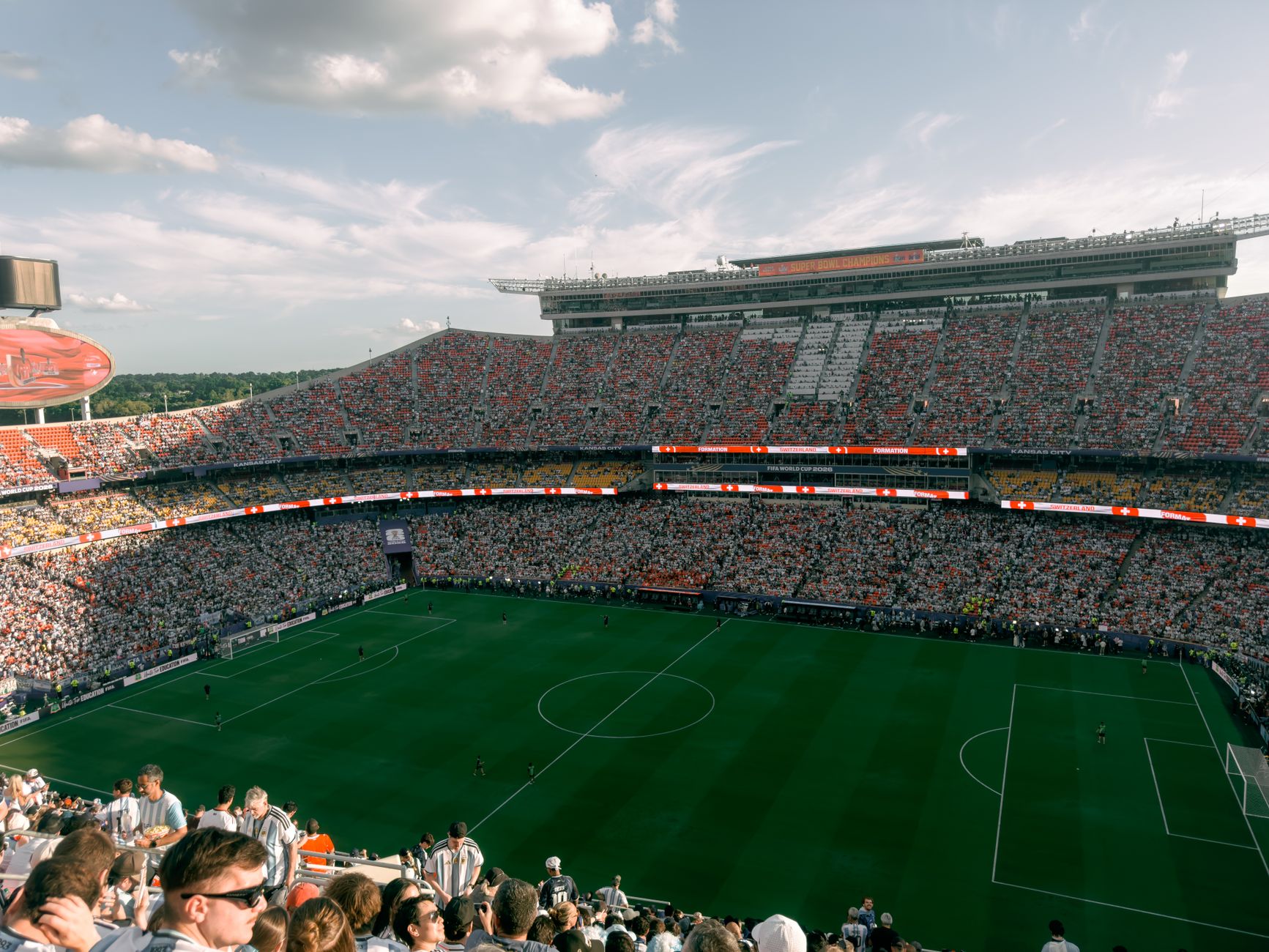
Photo by Allen Boguslavsky on Pexels
The second mistake is treating host-city marketing as tactical evidence. Kansas City’s identity as the Soccer Capital of America is meaningful for local football culture, especially with Sporting Kansas City and a strong regional sports base. Yet a national team’s expected goals profile, defensive transition structure, and bench depth are better indicators than city slogans. According to the Kansas City Sports Commission, the region has long positioned itself as a major sports-event market, but hosting capability is different from match predictability.
See the details behind tournament narratives before accepting the obvious angle.
A more useful Kansas City checklist looks like this:
- Identify the exact kickoff time and likely temperature.
- Compare each team’s previous travel route.
- Track public market movement after lineup rumors.
- Review whether either side needs only a draw.
- Check if the crowd split favors one nation.
- Avoid assuming festival energy equals goal volume.
What about expanded-format edge cases?
Expanded-format edge cases matter because 48 teams create more uneven group dynamics, more rotation incentives, and more late qualification scenarios. Some matches may feature elite teams protecting players while outsiders chase goal difference aggressively.
This is where many casual previews fail. The 2026 format does not simply add more football; it changes incentives. A team that has already secured progression may rotate fullbacks, rest a high-usage forward, or reduce pressing intensity in the final group match. Another team may need a multi-goal win and accept defensive risk from the first whistle. In betting terms, that can affect totals, corners, cards, and second-half markets more than the headline moneyline.
One overlooked information-gain point: expanded tournaments often create pricing lag in matches involving debutant or lower-profile teams. Public markets may anchor too heavily to brand names, while specialist analysts focus on tactical compatibility. For instance, a compact 5-4-1 team with set-piece strength can frustrate a possession favorite if the favorite lacks aerial dominance. That does not make the underdog “better”; it makes the matchup narrower than reputation suggests. World Cup Hub’s preferred method is to build match notes from style interaction first, then compare prices later. [Internal Link: tactical betting guide for football tournaments]
Another under-discussed edge case is recovery geography. A team playing in Kansas City after a West Coast fixture may face a different body-clock challenge than a team arriving from a nearby Central Time venue. This is not a guaranteed betting edge, but it belongs in the same file as hamstring history, squad age, and substitution patterns. “FIFA’s objective is to stage the most inclusive World Cup ever,” FIFA has stated in relation to expansion, but inclusivity also means broader variance for analysts and bettors.
Where does 2026 World Cup football fail?
2026 World Cup football fails as a betting topic when analysis becomes too emotional, too brand-driven, or too dependent on one star player. The tournament is global entertainment, but betting decisions require narrower, colder evaluation.
The third mistake is assuming that recognizable teams are always fairly priced. Brazil, Argentina, England, France, Spain, Germany, Mexico, and the United States will attract enormous attention, but attention is not the same as value. Public money can shorten odds before team news fully justifies the move. In regulated betting markets, this can make contrarian patience more useful than early enthusiasm. World Cup Hub readers should watch whether prices move because of verified information or because a viral clip, celebrity reaction, or fan-festival scene gains traction.

Photo by Yara Solis Fuentes on Pexels
The fourth mistake is overusing historical World Cup results. Germany’s past tournament record, Argentina’s Lionel Messi era, or France’s recent depth can provide context, but 2026 squads will be different from 2018 and 2022. Player workload in UEFA Champions League, Premier League, La Liga, Major League Soccer, Liga MX, and Saudi Pro League calendars will shape form. A defender who looked elite in qualifying may arrive after 55 club appearances. A young attacker may have strong per-90 data but limited knockout experience. [Internal Link: player stats and squad rotation tracker]
Get started with a sharper, less emotional reading of the 2026 tournament.
The fifth mistake is ignoring market type. A match winner bet, Asian handicap, player shots line, cards total, and live second-half market each answer a different question. If a favorite dominates possession but struggles to create central chances, the match winner may be poor value while corners or territory-based live angles become more interesting. Conversely, a volatile underdog may be dangerous on the counter yet unreliable across 90 minutes. The best approach is not “pick the winner.” It is matching the market to the most defensible part of your analysis.
Should you try 2026 World Cup football today?
Yes, you should follow 2026 World Cup football today if you approach it as structured analysis rather than hype. Start with fixtures, host cities, team news, and tactical profiles before considering any regulated betting market.
The sixth mistake is waiting until kickoff day to build context. By then, public narratives may already dominate pricing. Serious followers should track the draw, training-base locations, injury reports, warm-up friendlies, and confirmed squads. Kansas City, Toronto, Vancouver, Mexico City, Guadalajara, Monterrey, New York/New Jersey, Los Angeles, Dallas, Houston, Miami, Atlanta, Seattle, Philadelphia, Boston, and the San Francisco Bay Area all create different logistical profiles. This geography is not background decoration; it is part of the tournament’s competitive architecture.
A practical preparation workflow:
- Build a watchlist of 8 to 12 teams before the tournament.
- Record expected starting elevens and backup options.
- Compare tactical styles, not just FIFA rankings.
- Monitor travel sequences after the schedule is finalized.
- Separate public sentiment from verified team news.
- Review prices only after your football view is written down.

Photo by Antonio Quagliata on Pexels
The refined position is this: 2026 World Cup football deserves excitement, but it punishes lazy certainty. Kansas City may deliver one of the tournament’s most memorable atmospheres, and the FIFA Fan Festival Kansas City story will matter culturally. Yet match analysis still depends on personnel, tactics, rest, and incentives. World Cup Hub is most useful when it pushes past surface-level predictions and treats the World Cup as a moving data environment. That is the better way to enjoy the tournament and interpret regulated betting discussion. [Internal Link: 2026 World Cup Hub daily insights]
Want to follow the tournament with sharper context from the opening match to the final?
Frequently Asked Questions
Q: What is 2026 World Cup football?
A: 2026 World Cup football is the FIFA men’s national-team tournament hosted by the United States, Canada, and Mexico. It will feature 48 teams and 104 matches from June 11 to July 19, 2026. Kansas City is one of the host cities and is scheduled for six matches.
Q: How to analyze 2026 World Cup football matches?
A: Start by reviewing team strength, tactical style, travel route, rest days, and confirmed lineups. Do not rely only on FIFA rankings or past World Cup reputation. For betting-related analysis, compare your football view with the available regulated market rather than choosing a bet first.
Q: Is Kansas City important for the 2026 World Cup?
A: Yes, Kansas City is important because it hosts six matches and supports fan activity through the FIFA Fan Festival Kansas City program. Its regional football culture adds atmosphere, but it should not be treated as automatic betting evidence. Match conditions and team incentives remain more important.
Q: What is the difference between World Cup predictions and betting picks?
A: World Cup predictions forecast likely match outcomes, while betting picks assess whether the available price offers value. A team can be likely to win but still be overpriced. World Cup Hub separates tactical analysis from market evaluation to avoid confusing probability with value.
Q: Why do 2026 World Cup football predictions fail?
A: Predictions fail when they ignore rotation, travel, injuries, weather, and match incentives. The 48-team format can create unusual group-stage situations where motivation differs sharply between teams. Public narratives around star players and famous nations can also distort expectations.
Q: Is following World Cup Hub free?
A: World Cup Hub provides tournament-focused content for fans tracking the 2026 World Cup. Coverage includes match predictions, tactics, player stats, and daily tournament insights. Readers can use the site to build context before comparing information with their own market view.
Q: What should I do if my 2026 World Cup betting analysis feels unclear?
A: Pause and reduce the decision to one specific question, such as team news, total goals, or second-half tempo. If you cannot explain the edge in one sentence, the angle is probably too weak. Recheck lineups, travel, and motivation before acting.