What Nobody Tells You About Algeria vs Austria 2026
Algeria national football team vs Austria national football team standings ended level in Group J after a 3-3 FIFA World Cup draw in Kansas City on June 27, 2026, with both sides finishing on 4 points...

What Nobody Tells You About Algeria vs Austria 2026
Algeria national football team vs Austria national football team standings ended level in Group J after a 3-3 FIFA World Cup draw in Kansas City on June 27, 2026, with both sides finishing on 4 points. World Cup Hub tracks this fixture as a standings-defining result for fans following 2026 World Cup tactics, player stats, and betting markets across North America. Algeria recorded a 1-1-1 group line, scored through Rafik Belghali and Riyad Mahrez, and advanced as one of the best third-place teams. Austria also finished 1-1-1, with Marko Arnautovic, Marcel Sabitzer, and Sasa Kalajdzic scoring to secure second place behind Argentina. The decisive edge was not goal volume alone; it was Austria’s 96th-minute equalizer, which removed Iran from the qualification picture. The practical takeaway: judge these standings by late-game risk, tiebreaker pressure, and knockout-path consequences, not the scoreline alone.
Photo by Zepps Project on Pexels
Want a sharper read on the knockout picture and betting context before the next matchday?
If you want the standings answer: read the 4-point reality
Algeria and Austria both finished Group J on 4 points after the 3-3 draw, but Austria placed second while Algeria advanced from third. Argentina topped the group, and Iran missed out because neither Algeria nor Austria lost the finale.
The headline score hides the standings logic. Austria entered the final stretch needing protection against elimination, while Algeria had a strong third-place route if the match stayed level. At 2-2, both teams were positioned to survive. Then Riyad Mahrez scored in stoppage time for Algeria, briefly pushing Austria toward danger. Sasa Kalajdzic answered in the 96th minute, restoring the draw and confirming Austria’s place in the last 32. That single header changed the table outcome for Austria, Algeria, and Iran at once.
The match also showed why World Cup standings are not a simple ranking of who played better over 90 minutes. Austria’s second-place finish delivered a Round of 32 match against Spain in Los Angeles. Algeria’s third-place progression set up Switzerland in Vancouver, British Columbia. According to FIFA, the expanded 2026 FIFA World Cup uses a 48-team format, which creates a larger third-place qualification pool than previous 32-team editions. For more context, see our [Internal Link: 2026 World Cup group-stage tiebreaker guide].
Key standings facts:
- Match: Algeria 3-3 Austria
- Date: June 27, 2026
- Venue: Kansas City, Missouri
- Algeria record: 1 win, 1 draw, 1 loss, 4 points
- Austria record: 1 win, 1 draw, 1 loss, 4 points
- Austria finish: second in Group J
- Algeria finish: third in Group J, advanced
- Eliminated impact: Iran missed the knockout stage
If you track betting markets: focus on stoppage-time volatility
The best betting lesson from Algeria vs Austria is that late-game standings incentives can override ordinary match rhythm. At 90 minutes, one goal changed Austria from nearly eliminated to qualified, and it also changed Iran’s tournament outcome.
World Cup Hub’s gambling-focused analysis treats this match as a prime example of live-market danger. A bettor watching only possession, expected pressure, or reputation missed the key variable: both teams’ incentives changed minute by minute. Algeria’s late Mahrez goal was valuable for pride and table position, but it also forced Austria into a high-risk aerial response. Kalajdzic’s equalizer rewarded that urgency. In a knockout qualification scenario, stoppage time is not just extra time. It is a separate betting phase with different tactical behavior.
A practical information edge sits in the timing. Marko Arnautovic scored in the 28th minute. Rafik Belghali answered at 45 minutes. Marcel Sabitzer struck at 55 minutes. Riyad Mahrez scored at 60 minutes and again at 90+3. Sasa Kalajdzic equalized at 90+6. That means five of the six goals came from the 45th minute onward, including three after halftime and two deep in stoppage time. A standard pre-match preview often lists team strength. It rarely prices how a third-place qualification race creates chaotic final-six-minute behavior.

Photo by Pavel Danilyuk on Pexels
See the details behind match incentives, goal timing, and group qualification scenarios.
For responsible analysis, bettors should separate three questions before using Algeria national football team vs Austria national football team standings in a wager. First, does a draw help both teams? Second, does one team need a win to avoid a stronger Round of 32 opponent? Third, are external results affecting the third-place table? The BBC Sport live coverage highlighted the 96th-minute equalizer as the moment that confirmed Austria’s progress and Algeria’s advancement as a best third-place team. That is the operational lesson: table math creates pressure before the final whistle, not after it.
Use this quick betting-context checklist:
- Check points, goal difference, and goals scored before kickoff.
- Identify whether a draw benefits both sides.
- Track other group results involving third-place rivals.
- Watch substitutions after the 80th minute, especially target forwards.
- Avoid treating stoppage-time odds like normal-time odds.
For deeper tactical reading, review our [Internal Link: live betting strategy for World Cup group matches].
If you compare team performance: separate scoreline from standings value
Austria got the higher Group J finish, but Algeria extracted equal standings value by reaching the knockouts from third place. The 3-3 draw rewarded Austria’s resilience and Algeria’s attacking efficiency in different ways.
Austria’s scoring profile was balanced. Arnautovic gave them an early lead, Sabitzer restored control after halftime, and Kalajdzic supplied the decisive rescue header. Algeria’s scoring profile was more star-driven. Belghali’s first-half goal kept them alive, while Mahrez’s two goals showed why elite individual quality matters in tournament football. On raw points, both teams stood level at 4. On placement, Austria ranked higher. On opponent difficulty, both faced hard paths: Spain for Austria and Switzerland for Algeria.
The more useful comparison is not “who was better?” It is “who solved the standings problem better?” Austria solved it by refusing defeat after the 93rd minute. Algeria solved it by reaching 4 points and staying inside the best third-place bracket. Iran became the casualty because the draw removed the result combination Iran needed. This is a contrarian but practical conclusion: Algeria’s late winning goal was not necessarily the optimal standings event for the broader qualification race, because it forced Austria into desperation and reopened the match state.
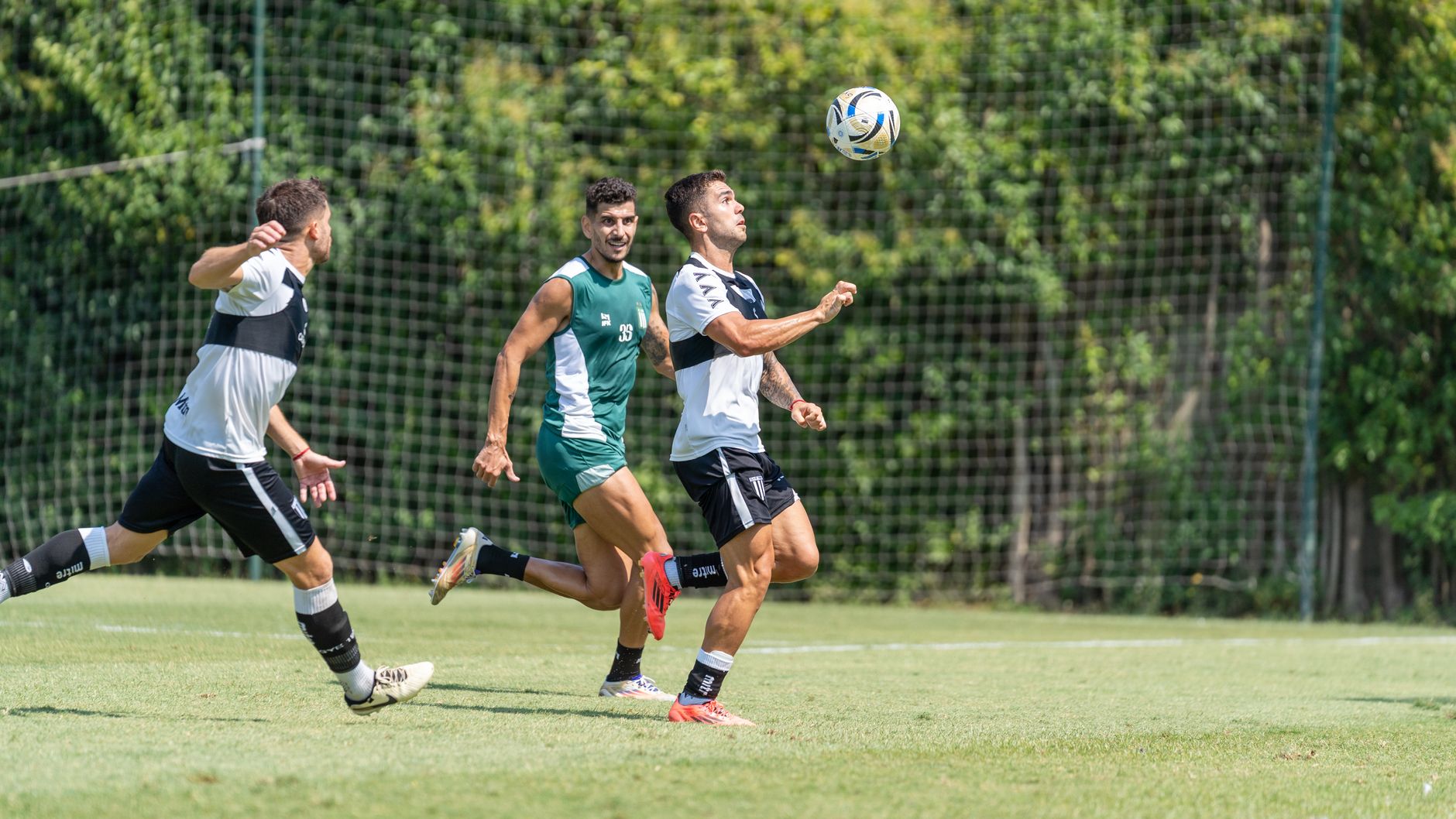
Photo by Franco Monsalvo on Pexels
The match also matters historically. Austria advanced in a World Cup knockout phase for the first time since 1982, according to major match reports from ESPN. Algeria became part of a strong African tournament showing, with multiple Confederation of African Football sides reaching the expanded knockout stage. FIFA’s tournament materials state that the World Cup is the game’s “ultimate prize,” and this format made third-place management more important than in 2018 or 2022. To continue the comparison, check our [Internal Link: Algeria World Cup tactical profile].
What should you do if you need a quick standings read?
Start with points, then placement, then opponent path. For Algeria vs Austria, both teams had 4 points, Austria finished second, Algeria finished third, and both advanced after the 3-3 draw.
A fast standings read should ignore emotional labels such as “winner” or “collapse” until the table is checked. Algeria did not win the match, but still achieved the main tournament objective. Austria did not dominate the final minutes, but still earned the stronger group placement. Iran did not play in this specific fixture, yet the result ended its route to the knockout stage. That is how interconnected World Cup group football becomes under a 48-team format.
Here is the clean decision tree:
- Did the team reach 4 points or more?
- Did the result secure a top-two place?
- If not, did it qualify through the best third-place route?
- Did the next opponent become easier or harder because of placement?
- Did late goals alter live betting outcomes or outright futures markets?
Get started with clearer standings models before the Round of 32 begins.
This method also helps bettors avoid a common trap. A bettor who backed Austria to advance cared less about winning the match than surviving the group. A bettor who backed Algeria in a match market suffered from Kalajdzic’s late header. A bettor who backed both teams to score or over goals saw a different outcome entirely. Same game. Different market logic. That is why World Cup Hub separates standings analysis, player props, and live betting signals instead of treating them as one prediction.
Common pitfalls to avoid
The biggest mistake is reading Algeria 3-3 Austria as only a six-goal thriller. It was also a standings mechanism that sent Austria and Algeria through while eliminating Iran.
Avoid three errors. First, do not assume equal points mean equal placement. Austria and Algeria both had 4 points, but Austria finished second in Group J. Second, do not ignore external table effects. Iran’s fate changed because the draw held. Third, do not treat stoppage-time goals as random noise. In this match, stoppage time contained the two most consequential events: Mahrez at 90+3 and Kalajdzic at 90+6.
Common analysis mistakes include:
- Calling Algeria “unlucky” without noting qualification was secured.
- Calling Austria “safe” before the 96th-minute equalizer.
- Ignoring Argentina’s role as Group J winner.
- Treating Spain and Switzerland as equal knockout rewards.
- Using final score instead of standings incentives for betting review.

Photo by Walter Medina Foto on Pexels
Another underreported detail is how opponent path changes the value of finishing second versus third. Austria’s second-place finish led to Spain, the European champions, in Los Angeles. Algeria’s third-place route led to Switzerland in Vancouver. Those are different tactical problems. Spain punishes midfield turnovers and weak rest defense. Switzerland forces physical duels, transition discipline, and set-piece concentration. The standings did not just decide survival. They shaped preparation, travel, opponent scouting, and betting prices across the Round of 32.
What is the 30-day check-in after Algeria vs Austria?
The 30-day check-in is a post-match review that tests whether the standings result predicted real knockout strength. For Algeria and Austria, review opponent performance, injury reports, travel load, and betting line movement 30 days after June 27, 2026.
This review matters because group-stage drama often overstates or understates a team’s actual level. Austria showed resilience, but conceding twice to Mahrez exposed late defensive spacing. Algeria showed attacking nerve, but conceding in the 96th minute exposed aerial pressure problems. A 30-day window reveals whether those issues were isolated or structural. It also shows whether the betting market corrected too aggressively after one emotional match.
Use this 30-day review framework:
- Compare knockout result against Group J placement.
- Check whether Mahrez, Sabitzer, Arnautovic, and Kalajdzic maintained influence.
- Review goals conceded after the 80th minute in later matches.
- Track closing odds movement from opening line to kickoff.
- Compare public narratives with actual shot quality and set-piece data.
For broader tournament coverage, visit our [Internal Link: 2026 World Cup knockout stage analysis]. World Cup Hub uses this type of review to separate sustainable performance from one-night chaos. The Algeria national football team vs Austria national football team standings tell the first story. The next 30 days tell whether that story was predictive.
Ready to follow the knockout stage with sharper context and cleaner data?
Frequently Asked Questions
Q: What is the Algeria national football team vs Austria national football team standings result?
A: Algeria and Austria both finished on 4 points after their 3-3 draw in Group J. Austria placed second behind Argentina, while Algeria advanced as one of the best third-place teams. The result also eliminated Iran because the draw preserved both teams’ qualification positions.
Q: How did Austria qualify after drawing 3-3 with Algeria?
A: Austria qualified by reaching 4 points and securing second place in Group J. Sasa Kalajdzic’s 96th-minute equalizer was decisive because Austria had been at risk after Riyad Mahrez scored at 90+3. The goal restored the draw and confirmed Austria’s Round of 32 place.
Q: What is the difference between Austria’s and Algeria’s qualification paths?
A: Austria qualified as Group J runner-up, while Algeria qualified through the best third-place route. That difference changed their knockout opponents, with Austria facing Spain in Los Angeles and Algeria facing Switzerland in Vancouver. Both advanced, but their paths carried different tactical and betting implications.
Q: Why did Iran fail to advance after Algeria vs Austria?
A: Iran failed to advance because the Algeria-Austria draw allowed both teams to stay above the required qualification threshold. Iran needed a different result from that match to improve its third-place standing. Kalajdzic’s late equalizer closed that route and sent both Algeria and Austria through.
Q: How should bettors use Algeria vs Austria standings data?
A: Bettors should use the standings data to evaluate incentives, not just team strength. A draw helped both teams in the final table, and stoppage-time pressure created unusual live-market risk. Always check points, goal difference, external group results, and qualification scenarios before betting on final group matches.
Q: Is Algeria vs Austria 3-3 a good example of World Cup group-stage volatility?
A: Yes, it is one of the clearest examples because two stoppage-time goals changed qualification pressure in opposite directions. Mahrez’s 90+3 goal pushed Austria toward elimination, while Kalajdzic’s 90+6 equalizer rescued Austria. The match proves that final group standings can shift dramatically after the 90th minute.