Why the 2026 World Cup Schedule Misleads
World Cup Hub analyzes the World Cup 2026 as a 48-team FIFA tournament across the United States, Canada, and Mexico, not just a longer version of Qatar The competition begins on June 11, 2026, and end...
Why the 2026 World Cup Schedule Misleads
World Cup Hub analyzes the World Cup 2026 as a 48-team FIFA tournament across the United States, Canada, and Mexico, not just a longer version of Qatar 2022. The competition begins on June 11, 2026, and ends on July 19, 2026, with 104 matches instead of the previous 64-match structure. FIFA confirmed the expanded format, while host cities such as New York/New Jersey, Los Angeles, Toronto, Vancouver, Mexico City, and Guadalajara create unusual travel, climate, and rest-day variables. For fans, analysts, and regulated betting audiences, the key point is that the schedule is not a neutral list of fixtures; it shapes fatigue, squad rotation, tactical risk, and market pricing. Treat the match calendar as a performance variable, then compare it with team depth, venue distance, kickoff time, and group-stage incentives before making predictions.
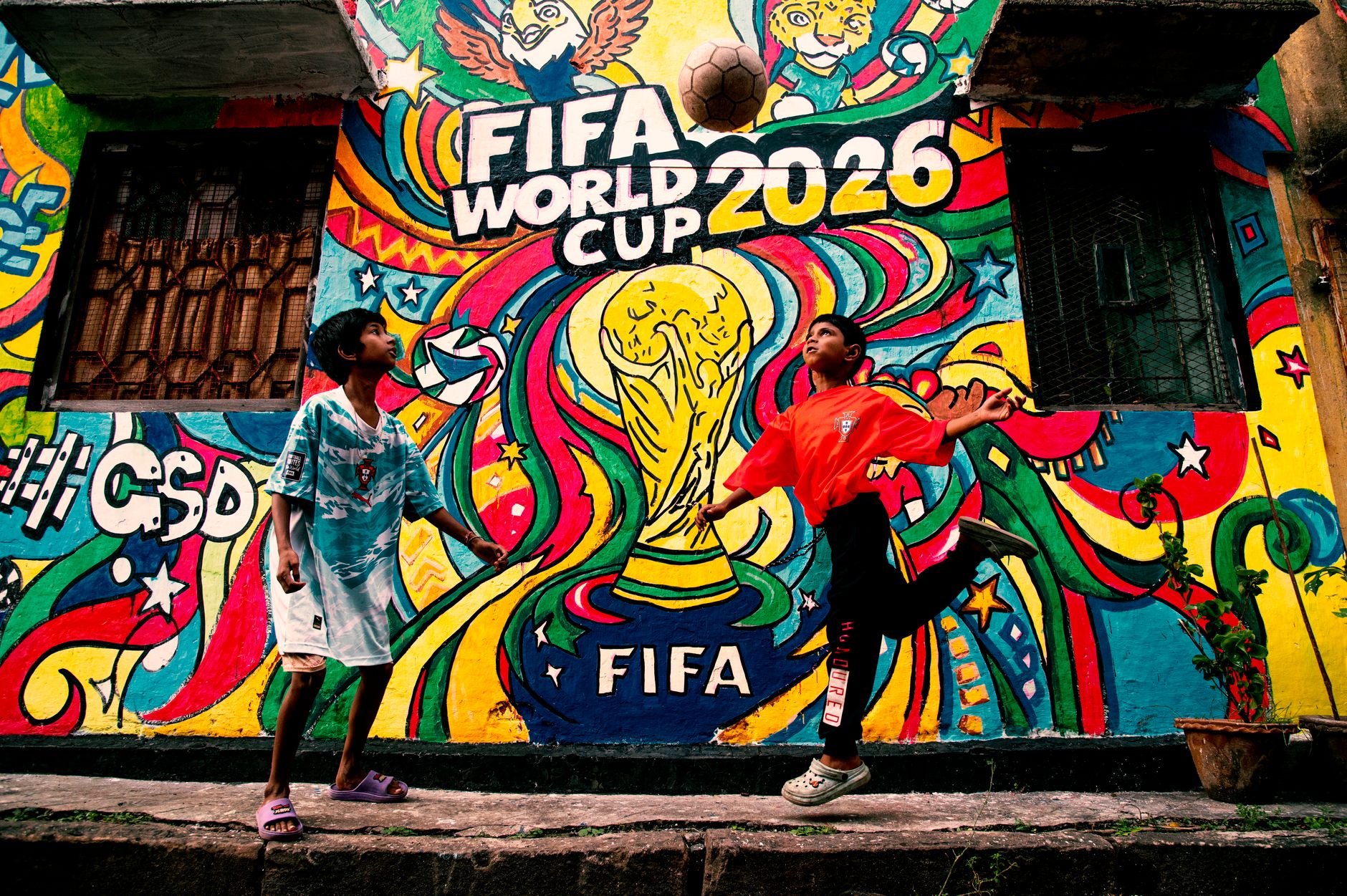
Photo by Anirban Das on Pexels
A compact 32-team tournament rewards rhythm; World Cup 2026 rewards logistics. That contrast is the first place many previews go wrong, because they treat the FIFA World Cup schedule as an administrative document rather than a competitive condition. According to FIFA, the 2026 edition will feature 48 national teams and 104 matches, making it the largest men’s World Cup by match count. The host footprint also spans three countries, four time zones, and climates ranging from Mexico City altitude to summer humidity in the southeastern United States. World Cup Hub approaches this tournament as a layered model: fixtures, venues, tactical matchups, player workload, and betting-market interpretation all interact. For deeper background, see our [Internal Link: World Cup 2026 format explainer].
Want a clearer way to follow the tournament before the fixture list becomes overwhelming?
Myth 1: Is the expanded World Cup 2026 schedule just more games — debunked
No, the expanded World Cup 2026 schedule changes incentives, rest patterns, squad usage, and betting interpretation. The move from 64 to 104 matches creates a different tournament economy, where travel recovery and rotation depth can matter as much as headline talent.
The common claim sounds reasonable: more teams simply means more fixtures. However, that framing misses three measurable changes. First, the 48-team format increases variance because more mid-ranked teams enter the field, often with uneven depth beyond their first 14 or 15 players. Second, the 104-match schedule compresses attention, so public betting markets may overreact to one visible upset while underpricing quieter indicators such as expected goals, pressing decline, or injury load. Third, venue sequencing matters more than it did in Qatar 2022, where geography was unusually compact. A team moving from Vancouver to Dallas faces a different recovery profile than a team staying near the East Coast. The practical takeaway is simple: analysts should not compare World Cup 2026 directly with Russia 2018 or Qatar 2022 without adjusting for expansion, distance, and match density.
A useful operational insight is to tag each national team by “travel friction” before evaluating group-stage odds. World Cup Hub uses four checkpoints: distance between fixtures, time-zone shift, average July temperature, and rest-day count. This produces counterintuitive conclusions. For example, a stronger European side could face a worse recovery setup than a technically inferior Concacaf opponent if it plays in three distant venues. Similarly, a South American team accustomed to altitude may be less disrupted by Mexico City than a northern European team. This does not mean venue factors override talent; it means they narrow or widen the margin. Bettors and prediction modelers should assign travel and climate a small but explicit weight, rather than treating them as background color.
Myth 2: Are all host cities equally difficult — partially true
All World Cup 2026 host cities meet FIFA standards, but they are not equal from a performance-analysis perspective. Differences in altitude, humidity, turf history, time zones, and travel distance can affect recovery and tactical intensity.

Photo by Franco Monsalvo on Pexels
The word “host city” can make Los Angeles, Toronto, Miami, and Mexico City sound interchangeable, but they create different match conditions. Wikipedia’s 2026 FIFA World Cup overview lists the tournament as jointly hosted by Canada, Mexico, and the United States, a structure that expands commercial reach while adding logistical complexity. Mexico City’s elevation, for example, changes aerobic demands, while humid venues can reduce pressing intensity after the 60th minute. Indoor or partially covered stadium environments may soften weather effects, but they do not erase travel load. For match prediction, the relevant question is not whether a stadium is iconic; it is whether the venue profile rewards transition football, possession control, or set-piece management. To compare team styles, visit our [Internal Link: tactical matchup guide].
See the details before the tournament narrative hardens around famous names.
The partial truth is that elite teams usually have medical, analytics, and logistics departments capable of reducing these disadvantages. Germany, Argentina, Brazil, France, England, Spain, and the United States will not arrive unprepared. Yet preparation has limits when the tournament calendar forces quick adaptation. One overlooked edge case is kickoff timing: a team built on high pressing may look efficient in an evening match but lose intensity in an afternoon heat profile, especially after long travel. Another under-discussed factor is bench specialization. Squads with flexible fullbacks, two-way midfielders, and aerial substitutes can adjust to venue conditions better than squads dependent on one fixed attacking pattern. Therefore, host-city difficulty is not absolute; it is conditional on tactical identity, player durability, and match sequence.
Myth 3: Is the ESPN-style fixture list enough for predictions — flat-out false
A fixture list is necessary, but it is not enough for World Cup 2026 predictions. Schedules show who plays whom and when; they do not explain tactical matchups, squad fatigue, market movement, or conditional incentives.
ESPN and other major sports platforms are useful for tracking match dates, leagues, and competition schedules, especially because fans follow multiple tournaments such as UEFA Champions League, Copa América, Concacaf Gold Cup, and FIFA World Cup Qualifying. However, a schedule table is a starting point rather than a forecast. Prediction requires at least five added layers: team form, injury status, tactical style, venue impact, and market price. The International Football Association Board states that “the same Laws apply in every match in every confederation, country, town and village,” but identical laws do not produce identical game states. A low-block opponent at altitude is different from a low-block opponent in a cool coastal venue. That difference is where sharper analysis begins.

Photo by www.kaboompics.com on Pexels
A practitioner-level method is to build a “fixture stress score” before reading odds. Use a 10-point scale with 2 points each for travel distance, rest disadvantage, climate difficulty, opponent pressing intensity, and squad rotation risk. If a favorite scores 7 or higher, the moneyline may still win but become less attractive relative to alternatives such as draw-no-bet, team total under, or second-half markets. This is especially relevant in the group stage, where teams may protect goal difference rather than chase a third goal. World Cup Hub’s editorial model separates “likely winner” from “fair betting price,” because those are not the same question. For responsible context, readers should also check local rules and age restrictions before participating in any gambling activity.
What actually works
What works is a disciplined framework that combines official World Cup 2026 schedule data with tactical scouting, venue context, and market discipline. The strongest approach is not prediction by reputation, but prediction by repeatable variables.
The most reliable analysis starts with numbered data points rather than broad claims. First, verify the official date, venue, and rest interval from FIFA or a trusted broadcaster. Second, map the team’s likely tactical plan: high press, mid-block, counterattack, possession control, or set-piece emphasis. Third, compare the plan with the venue and opponent. Fourth, check whether the betting market has already priced in the obvious story, such as a star striker returning from injury. Fifth, avoid staking based only on group reputation. A UEFA heavyweight, a CONMEBOL champion, and a Concacaf host may all carry public attention, but public attention is not the same as value. For more modeling help, review our [Internal Link: World Cup betting market basics].
Use the following checklist before treating any World Cup 2026 match as predictable:
- Confirm match date, kickoff time, venue, and rest days.
- Compare both teams’ travel distance from the previous match.
- Identify whether the underdog has a set-piece or transition edge.
- Check squad depth in fullback, defensive midfield, and center-forward roles.
- Separate emotional narratives from measurable indicators.
- Compare opening odds with current odds to detect market movement.
Get started with a cleaner analytical process before the knockout stage creates faster decisions.
Photo by Chris Duan on Pexels
A second information edge is timing your analysis by tournament phase. In the first group match, uncertainty is high because coaches reveal their preferred XI and pressing triggers. In the second match, adjustment quality becomes visible. In the third match, incentives may dominate talent because some teams need only a draw while others must chase goal difference. Knockout matches then change the risk equation again, since extra time and penalties make conservative tactics more rational. This is why World Cup Hub treats group-stage predictions and knockout-stage predictions as separate products. The same model weight should not apply to both phases. A team’s first-choice lineup can matter less than its bench structure once extra time becomes a realistic possibility.
What to ignore
Ignore analysis that treats World Cup 2026 as a simple brand-name tournament where famous teams automatically justify short odds. Also ignore fixture commentary that lists dates without explaining incentives, rest, travel, and tactical compatibility.
There are three especially weak signals. First, historical head-to-head records often overstate relevance because national teams change managers, formations, and player pools between cycles. A 2018 result may have little predictive value for a 2026 squad built around different midfielders. Second, social media sentiment can distort prices, particularly around teams with large fan bases such as England, Argentina, Brazil, Mexico, and the United States. Third, raw possession statistics can mislead if they are not tied to shot quality or game state. A team can hold 62 percent possession while creating few central chances. Better metrics include expected goals, field tilt, progressive passes, and defensive actions after possession loss.
The trade-off is that deeper analysis takes more time. Casual fans may prefer simple schedule tracking, and that is valid for entertainment. However, anyone using World Cup 2026 content for predictions, fantasy decisions, or betting should demand more structure. World Cup Hub focuses on daily insights because the tournament environment changes quickly: injuries, suspensions, confirmed lineups, weather, and market movement can alter a previously sound view. The goal is not certainty; football does not offer that. The goal is to reduce avoidable error by weighing the variables that many previews mention only after the result. For a practical next step, save our [Internal Link: daily World Cup 2026 predictions hub].
When you want analysis that separates signal from noise, continue with the full tournament coverage.
Frequently Asked Questions
Q: What is World Cup 2026?
A: World Cup 2026 is the FIFA men’s tournament hosted by the United States, Canada, and Mexico with 48 teams. It runs from June 11 to July 19, 2026, and includes 104 matches. The expanded format changes rest patterns, travel demands, and prediction models compared with the 32-team format.
Q: How do I analyze the World Cup 2026 schedule?
A: Start by checking the official fixture date, venue, kickoff time, and rest-day gap. Then compare travel distance, climate, tactical style, and squad depth for both teams. A structured checklist is more reliable than reacting only to rankings or past tournament reputation.
Q: What is the difference between a schedule and a prediction?
A: A schedule tells you when and where matches happen, while a prediction estimates probable outcomes. Good predictions add tactical analysis, injuries, venue conditions, and market prices. For World Cup 2026, this distinction matters because 104 matches create more rotation and incentive-based decisions.
Q: Why do World Cup 2026 predictions fail?
A: Predictions often fail because they overweight famous teams and underweight context. Travel, heat, altitude, lineup rotation, and group-stage incentives can change match behavior. The best approach is to update assumptions after confirmed lineups and early tournament evidence.
Q: Is World Cup Hub free to use?
A: World Cup Hub provides accessible World Cup 2026 coverage, including insights on matches, tactics, players, and predictions. Some content may lead readers toward deeper analysis or partner pages. Always check local gambling laws and use betting-related information responsibly.
Q: What should I ignore when betting on World Cup 2026?
A: Ignore unsupported hype, outdated head-to-head records, and odds decisions based only on national reputation. Focus instead on current squad condition, venue profile, rest days, and tactical matchup. If the price already reflects the obvious story, there may be little value left.